Feeds:
Posts
Comments

Paushuize 1
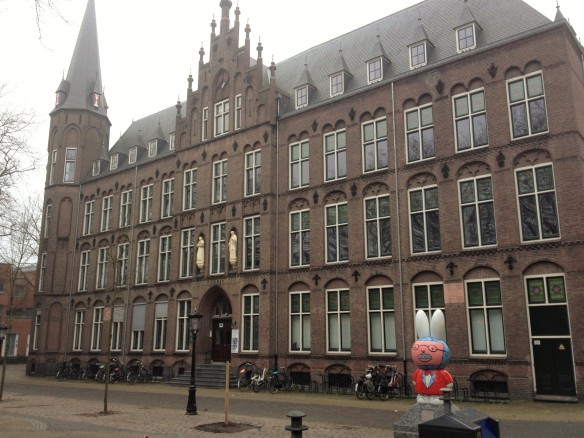
It’s been ages since I’ve done one of my Time Travel posts! Why not bring the theme back in a big way, going all the way to the top! This, my dear readers, is the Paushuize, a home built by Adrian VI, the only pope from the Netherlands.
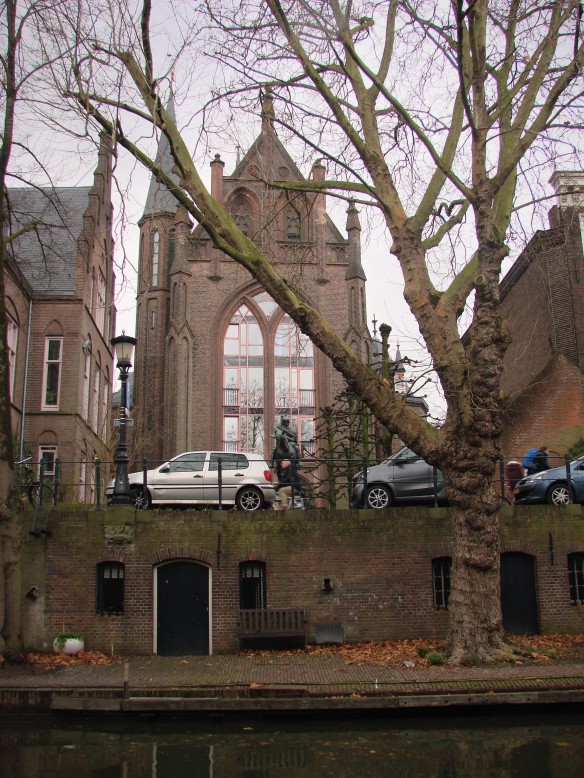
Paushuize
This papal residence was built in 1517, a few years before Adrian VI, AKA Adriaan Florenszoon Boeyens, became pope in 1522. Unfortunately, he never got the chance to live in the residence. Still, Adrian was a native of Utrecht, born in 1459, most likely in a house on the corner of Brandsteeg and the Oudegracht. He was of modest means, with his father having worked as a carpenter and shipbuilder. Adrian became a scholar, with Erasmus counted among those who attended his lectures. He also became tutor to the man who would go on to become Emperor Charles V.

This is where my European readers can skip ahead, as I’m about to become giddy in a way that only an American history buff can. You see, for me, the Holy Roman Empire is something from history books, seeming almost mystical, as if coming from a fairy tale. Despite the fact that I’m well aware that the Netherlands as a nation state didn’t really exist until the 1800s — much as Italy, as a nation, didn’t exist until the 1800s either — it’s still kind of thrilling to realize that Utrecht, as the capital of the Bishopric of Utrecht, was a part of the Holy Roman Empire. Squeeee! I live in what used to be the Holy Roman Empire! As I said, I’m American. I’m easily impressed by history.

Pausdam

Anyway, this is where my love of Italian Renaissance history collides with my ever-growing fascination with Utrecht’s history. You see, Adrian became pope after the death of Leo X, the infamous Medici pope. Leo X is one of the few pope’s I remember, specifically because he was a Medici and I learned a great deal about them as I was studying art history. Amusingly, considering the machinations that took place any time one of the ruling families managed to get a family member elevated to the papal position, Adrian seemed determined to try to rule impartially and to rein back on the abuses of the system, including indulgences and matrimonial dispensations. But then, as now, money talks and I don’t think he had much luck.

To bring this post back around to papal residences, it seems that Adrian had never actually visited Rome before being named head honcho of the Catholic church. Sort of like me not having visited the Netherlands before moving here. One of the concerns for every expat is finding somewhere to live when you get to your new land. In this case, despite the lovely house he’d had built here in Utrecht, he was concerned that he’d have nowhere decent to stay in Rome, where he could dispense his papal duties. Fortunately, I think Human Resources managed to sort something out for him.

Pope's House

Dom Met Dom

Intruder! Intruder!
Look closely. See the non-black cat on the other side of the window? Cute scene, right? My two black cats checking out the neighbor cat who has decided to perch on the window sill and be the typical curious cat. There’s no doubting it’s a cute cat, and one who has perched there many times in the past.

Squint

That’s not the only neighborhood cat that’s come for a visit. This ginger has stopped by a few times as well. Unfortunately, my two cats don’t like these trespassers. Lola, in particular, takes issue with them merely walking by and howls her head off and goes all puffy when they sit on her windowsill — or even think about it.
Intruder

Cat Fight

Luna makes a bit of noise, but she generally leaves the real smack-talking to Lola. Here’s Luna tagging out, while Lola puffs up in preparation for an epic battle.
Tag Team
The next thing I knew, there went my curtains, as Lola launched herself at the other cat (who you can just spy behind Lola and the curtains).
There go my curtains
At the end of the battle, my curtains had various puncture marks and a few small tears in them. Not ideal, but things could have been worse.

In fact, they could be much worse. This is what happened this week when the ginger cat came back. Completely torn!
This is why we can't have nice things

I think I have enough of the fabric left over to remake the curtain panel, but I’ve been hesitant to try for fear that we’ll have another throw-down. As I said, this is why we can’t have nice things.

Taunting

Wilbert en Wilibrord
I enjoy the world-between-worlds effect of photographing reflections in windows. With or without a bit of manipulation of contrast, you can find interesting juxtapositions of interiors and exteriors. On January 1, as I was out wandering the quiet city, my eye was caught by the reflection of the Willibrord church in the window of a hi-fi equipment store on Domstraat. The reflection against the window signage created an interesting billboard, particularly since the name Wilbert was there, a name close to the name of the church reflected. The final crowning glory to the image was the almost glitter-like glow from the interior light shining against the glass.

Peaceful
One of my favorite spots is this little park area at the southern end of the old city center. I’m constantly drawn to it, pulled in by the appeal of what surrounds it: the Nieuwegracht and the ring canal, the old city wall, the towering trees, and most of all, by the Spoetnik Kijker (Sputnik Watcher). I’ve written about him before, and I’ve certainly photographed him numerous times, but he’s always a source of peaceful inspiration to me. I’ve been trying to get a shot of him during different seasons throughout the year. I took some photos this past December to try to capture some of the bare elegance of both the sculpture and the setting. I’m sure I’ll always return to him, with or without camera in hand. He really does make me feel peaceful and that little bit happier.

Thoughts

Noble

Almost Wordless Wednesday

Molen de Ster
Last year, I started to do an Utrecht Daily Photo theme, but quickly slacked off, since I felt like I should add a bit more text to the photos if they were going to be on this blog. This year, I’ve been trying again, but this time on a separate blog, in fact, on Tumblr, which doesn’t make me feel like I should add much text. Anyway, if you want random photos of Utrecht on a daily basis and don’t want all my rambling thoughts, feel free to check out Trajectum Trajectories for a daily photo. There’s no rhyme nor reason to the photos I’ll be posting, other than I kind of like them and they’re taken in Utrecht.

In the News

There are a couple of recent stories that have caught my interest, with some of them having tie-ins to things I’ve posted about recently or in general. I thought I’d do a quick run-down here of some of the stories and why they’re of interest to me.

Tick Tock

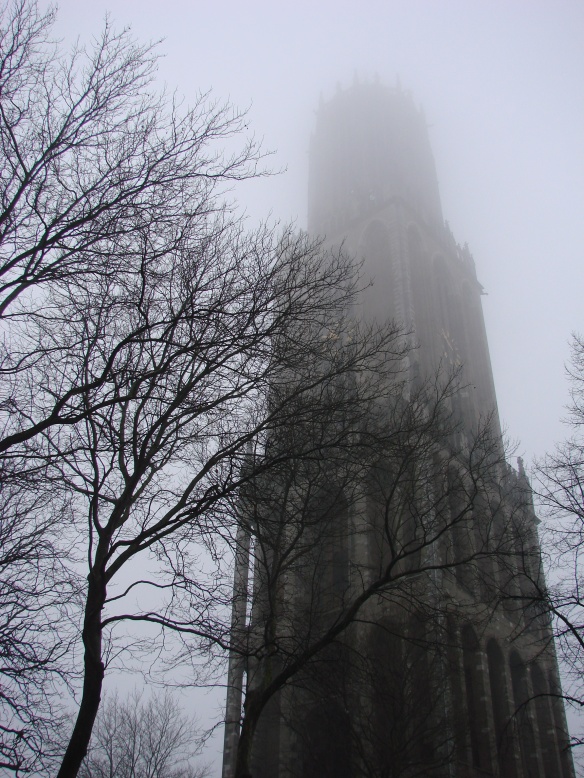
First up is the news that the Domtoren is no longer signaling the quarter hour as it used to do. It seems that one of the pieces that is used for the automatic playing is damaged through normal wear and tear, so it won’t be used until it can be replaced. The current piece in question has been there since 1980. Fortunately, once the piece is replaced, the Domtoren will go back to chiming every 15 minutes.

Lego My Chair
Next up is the news that Rietveld’s famous Red and Blue Chair (seen here in a Lego version) is inspiring artists yet again. DWA, along with RnB, has used the chair as the basis for their redesign project:

The redesign project is an experiment into using music as inspiration in the design process, we ‘remix’ existing designs according to various musical genres, with the hope of making design as expressive as music.

I particularly like the RnB IKEA (pop) version of the chair, perhaps because of the interactive element, as well as the humor of it.

Headscarves
Finally, in somewhat more serious news, Queen Beatrix has been in Abu Dhabi this past week on a state visit, and while there she visited the Great Mosque. Naturally, she wore a headscarf/hijab (over her hat) as is required of any woman wishing to enter the mosque. Of course, members of the generally anti-Muslim PVV party decided to lambaste the queen for doing so, claiming she was legitimizing the suppression of women. The queen fired back that it was “echt onzin/sheer nonsense”.

As one of the articles about the story points out, “Ironically the party’s remarks came while Beatrix was in Abu Dhabi, one of the Islamic world’s most emancipated states, where two-thirds of university students and 70 per cent new business owners are women.”

As another article says, Wilders, the leader of the PVV, has certainly been known to wear a yarmulke when visiting synagogues, despite the fact that he is not Jewish. Depending on the branch of Judaism, there are sects where you could argue that there is similar suppression of women. For that matter, I remember lessons learned at a Southern Baptist school that also made it clear that women were lesser beings. In other words, Wilders and his supporters are being a bit hypocritical to say the least.

So, there’s my roundup of stories I’ve come across this week and found of interest. Hopefully, you found some of it at least vaguely interesting, as well. If you’re in Utrecht tomorrow, don’t forget it’s the kick-off of the monthly Cultural Sunday events held throughout the city. There’s always something interesting going on somewhere!

Oh, one last thing … Go Saints! (The New Orleans Saints are playing a play-off game tonight. Fingers crossed that they win!)

De Boog Brewery

Brouwerij

As I learn about Utrecht’s history, it’s like a constant game of connect the dots or six degrees of separation. There are frequent light-bulb moments when I can make connections between various buildings and locations around the city. Yesterday, as I was reading up on De Zeven Steegjes, I realized that there was a connection to another building I’d meant to research after photographing it recently.

During our visit to the kerstmarkt (Christmas market) that runs along the Oudegracht, we’d gone down to the wharf level so I could take some photos. As I was looking around, I realized one of the buildings on the opposite side of the canal was a (former) brewery called De Boog. There was a gate leading down to the wharf level with Boog written above it, as well, so I figured the bulk of the buildings that you can see in the photo above were a part of the brewery at some point. However, once home, I forgot to look further into the topic and it slipped my mind until yesterday when I saw the brewery mentioned in relation to De Zeven Steegjes.

De Boog brewery began production sometime around 1584 and remained in business until 1897, when industrial competition became too great. The Oudegracht was a common site for breweries at the time, because the canal waters themselves could be used in the brewing process, and the canal also served as a convenient way to bring in the materials and ship out the finished product. In an interesting bit of trivia, the brewery was damaged in the same storm in 1674 that caused the destruction of the cathedral’s nave. The nave was never rebuilt, but obviously the brewery was.

The brewery was originally owned by the Van Wyckersloot family, but eventually came into the ownership of Willem de Kock in the 1700s. Upon his death in 1761, he bequeathed almost all of his property, including the brewery, to the Roman Catholic church, specifically to benefit the poor and the poor houses. The brewery remained in operation and the profits went toward the construction of housing for the poor, including the building of the Zeven Steegjes! As a result, some of the names of the seven streets bear names that relate to the brewery and Willem de Kock: Boogstraat, Kockstraat, Brouwerstraat (Brewer Street) and Moutstraat (Malt Street). I can’t help but think that another of the streets, Suikerstraat (Sugar Street), might also bear some relation to the brewery and the brewing process.

It was nice to have this bit of research fall in my lap yesterday. It’s like a two-for-one deal in knowledge! I recommend taking a look at the photos and paintings included on the brewery’s Wikipedia page, particularly the painting of the buildings in the year they closed. It’s always interesting to see how little some sites have changed.

De Boog

Lucky Number Seven

Zeven Steegjes
I don’t remember how I first came across De Zeven Steegjes (The Seven Alleys), but somehow I always missed going to see them, even when I had plans to go see them. I know I’d hoped to see them in past years while at the kerstmarkt on Twijnstraat, since they’re nearby, but I guess I always got distracted by the gluhwein and the live nativity donkeys and sheep. Early this past November, however, I did finally get to see them, although purely by luck! I was just wandering around and found myself in an area I hadn’t visited before, when lo and behold, there they were!

I’m sure by now you’re wondering why I’m blathering on about alleys, so I’ll try to get to the point. These alleys were the result of a housing shortage in the 1800s, particularly housing for the poor. By the mid 1800s, the Catholic Poverty Organization began building simple homes for Roman Catholic children and families who were dependent upon charity. Eventually, with pressure from the government to provide more housing, 100 homes were built. With demands that there be no blind alleys and that the streets be straight to allow the wind to blow through (perhaps to avoid any stagnancy that might lead to a cholera outbreak), the result was the zeven steegjes.

Een Steegje

The buildings were simple to the extreme, containing no kitchen or toilets, but they were still fairly modern for their time. In 1952, approximately 100 years after they were built, they were sold by the Roman Catholic church and purchased by the city of Utrecht. Families still lived there, but because of the lack of kitchens and toilets, there was always talk of demolishing the buildings. In 1972, some basic renovations were done, but it wasn’t until 1992 that comprehensive renovations took place.

Steegje

There are now 166 homes spread out down Korte Rozendaal, Lange Rozendaal, Kockstraat, Brouwerstraat, Boogstraat, Moutstraat, Suikerstraat and Fockstraat. The homes and streets have retained some of their working-class neighborhood feel, yet they’re also attractive and charming streets just a few steps from the Catharijnesingel, part of the canal that rings the old city center of Utrecht. There’s a strong sense of community, encouraged by a traditional three-day block party held at the end of August each year. The party celebrates both the neighborhood, where many of the buildings are now considered municipal monuments, as well as the birthday of the (former) Queen Wilhelmina. In fact, I think it may have been a mention of the annual party that first brought de zeven steegjes to my attention.

Anniversary

Zeven Steegjes

Older Posts »

Follow

Get every new post delivered to your Inbox.

Join 431 other followers